When you are developing a new product, moving from a digital 3D model to a physical, functional parts is a critical leap. If you need 10 to 50 parts for functional testing, market validation, or crowdfunding campaigns, going straight to injection molding is often too expensive and time-consuming. This is exactly where a professional vacuum casting service bridges the gap. But a common question we hear from engineers and product designers is: What materials can I actually use? The short answer is that the vacuum casting materials used are primarily two-component polyurethanes (PU).
However, these aren’t just basic plastics. Through advanced chemical formulations, these PU resins can precisely mimic the mechanical, thermal, and visual properties of common production plastics like ABS, PC, PP, and even elastomers. In this comprehensive guide, Rally Plastic will break down the material properties and explore the different grades available.
The Significance of Material Selection in Low Volume Plastic Manufacturing
Choosing the right resin is not just about aesthetics; it dictates how your products will perform in the real world. In low volume plastic manufacturing, your prototypes often need to undergo the exact same rigorous testing as the final mass-produced units.
If you select the wrong material, your snap-fit joints might break during assembly, or your enclosures might warp under heat testing. A strategic material choice impacts:
- Performance and Durability: Ensuring the vacuum casting products can withstand mechanical stress, impact, and fatigue.
- Aesthetics and Finish: Determining if the part can achieve a high-gloss finish, crystal-clear transparency, or custom color matching without heavy post-painting.
- Project Feasibility: Some complex geometries or specific functional requirements dictate the limits of what a specific resin can handle.
At Rally Plastic, we always emphasize that partnering with a reliable vacuum casting factory means getting expert advice on material selection before a single drop of resin is poured. We look at your end-use application and match it with the precise polyurethane grade needed to replicate your intended production thermoplastic.
Demystifying the Vacuum Casting Process
To truly understand the vacuum casting materials, it helps to briefly understand how they are processed. The vacuum casting process (often associated with rapid tooling and silicone mold making) is elegant, efficient, and perfectly suited for small batches.
Here is a look behind the scenes at how we handle your projects at Rally Plastic:
- Creating the Master Pattern: First, we need an original model. We typically use an SLA 3D printing master pattern because photosensitive resin provides an incredibly smooth surface finish and precise details. This master is strictly used to verify the structure and appearance before mold-making.
- Making the Vacuum Casting Mold: We suspend the master pattern in a casting box, set up the gating and venting systems (positioning and fences), and pour liquid silicone around it. Once the silicone cures into a solid block, we carefully cut it open and remove the master. Your mold is now ready.
- The Casting Phase: This is where the magic happens. The empty silicone mold is placed inside a casting vacuum machine. The chosen polyurethane resin is mixed and poured into the mold while inside the vacuum chamber for resin casting. Why in a vacuum? Because it completely removes trapped air bubbles and forces the liquid resin into every microscopic detail of the mold, ensuring the highest density and structural integrity.
One of the most technical challenges in this industry is handling SLA master pattern tolerances in vacuum chamber for resin casting under different thermal conditions. Thanks to our experienced engineering team, we account for shrinkage rates flawlessly, resulting in parts that are incredibly close to injection molding quality, with short lead times and low costs.
Core Materials Used in Polyurethane Vacuum Casting
The beauty of a high-quality vacuum casting service lies in the versatility of resins. Let’s explore the most common vacuum casting materials available for your projects.
ABS-Like Resins (High Rigidity and Toughness)
ABS (Acrylonitrile Butadiene Styrene) is the workhorse of the consumer electronics and automotive industries. An ABS like resin vacuum casting process utilizes PU formulations that replicate the excellent impact resistance, structural strength, and dimensional stability of real ABS.
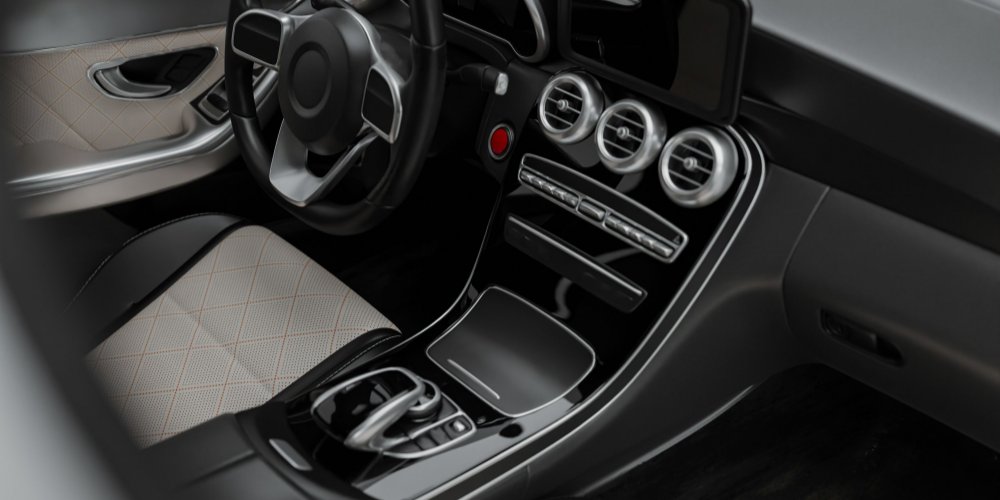
Best for: Housings for electronic devices, automotive interior components, and sturdy structural parts.
Properties: Good thermal resistance, easy to paint, and excellent for parts requiring threaded inserts.
PC/PMMA-Like Resins (Clear and Transparent)
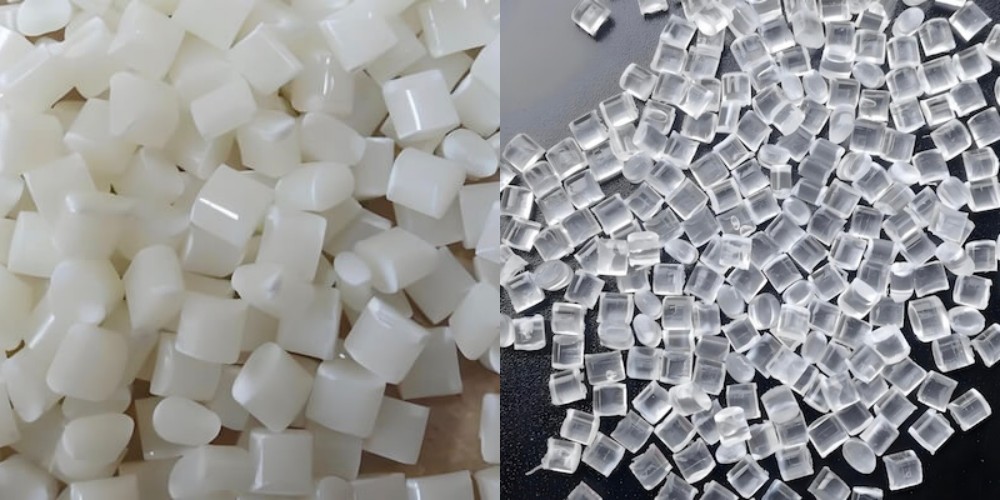
When your design calls for light guides, lenses, display covers, or fluid-flow verification models, you need optical clarity. PC (Polycarbonate) and PMMA (Acrylic) simulating resins are designed specifically for this purpose.
Best for: Headlamp lenses, transparent enclosures, and medical device viewports.
Properties: High light transmittance, UV resistance, and they can be tinted to specific translucent colors.
PP/PE-Like Resins (Flexibility and Fatigue Resistance)
Polypropylene (PP) and Polyethylene (PE) are known for their semi-crystalline flexibility. PP-like PU resins are incredibly resilient and can bend repeatedly without breaking.
Best for: Living hinges (like on a shampoo bottle cap), snap-fit assemblies, and packaging prototypes.
Properties: High elongation at break, excellent flexibility, and good chemical resistance.
Rubber/Elastomer-Like Resins (Soft and Tactile)
Not all prototypes are rigid. Sometimes you need a gasket, a seal, or an ergonomic overmolded grip. We offer elastomer-like polyurethanes in various Shore A hardness levels, ranging from very soft (like a gummy bear) to hard rubber (like a shoe sole).
Best for: Wearable device straps, waterproof seals, anti-slip grips, and shock absorbers.
Properties: Tear resistance, elasticity, and the ability to be overmolded onto rigid ABS-like parts.
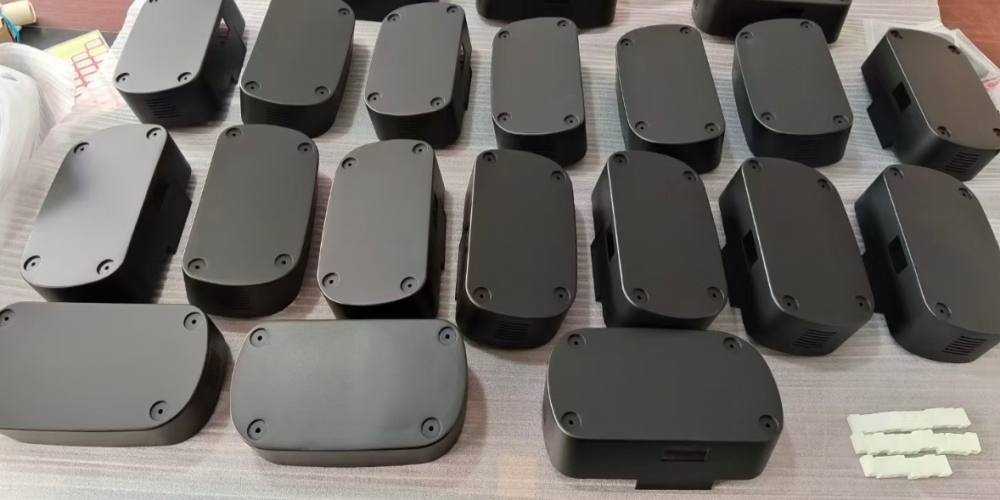
Scientific Material Comparison Table
To help you make an informed decision, here is a quick reference table showing the typical mechanical properties of these simulated vacuum casting materials. (Note: Exact values depend on the specific resin brand and curing conditions).
| Material Category | Simulates | Tensile Strength (MPa) | Flexural Modulus (MPa) | Heat Deflection Temp (°C) | Key Characteristic |
| Rigid PU | ABS | 40 – 55 | 1800 – 2200 | 70 – 85 | High Impact Resistance |
| Clear PU | PC / PMMA | 50 – 65 | 2000 – 2400 | 60 – 80 | Optical Transparency |
| Flexible PU | PP / PE | 25 – 35 | 900 – 1200 | 50 – 65 | Living Hinge Capable |
| Elastomeric PU | TPE / Rubber | 2 – 8 | N/A (Shore A 30-90) | N/A | Tactile Grip, Sealing |
Factors to Consider for Your Vacuum Casting Prototyping
With so many vacuum casting materials, how do you narrow it down? When you request a custom vacuum casting service quote from Rally Plastic, our engineers will ask you to consider the following factors:
Environmental Exposure
Will your prototype be exposed to high heat (e.g., under the hood of a car) or UV light (outdoor equipment)? If so, high-temperature ABS-like or UV-stabilized PC-like resins are mandatory.
Mechanical Stress
If the part acts as a load-bearing bracket, structural integrity is paramount. If it requires repeated bending, PP-like resins are the safest bet.
Surface Finish and Post-Processing
Do you need a matte finish, a high-gloss polish, or custom Pantone color matching? PU resins take paint and primers exceptionally well, but matching the exact texture requires a well-prepared master pattern.
Cost and Budget
While the overall process is highly cost-effective, specialized resins (like ultra-clear optical grades or high-temp formulations) may carry a slight premium over standard ABS-like materials.
Surface Finishes and Post-Processing for Vacuum Cast parts
In the vacuum casting process, the surface finish of the final part is governed by a simple principle: the silicone rubber mold will replicate the master pattern’s surface geometry down to the sub-micron level. Therefore, the post-processing phase is not just about aesthetics; it involves specific technical interactions between the polyurethane substrate and various chemical or mechanical treatments.
Here are the technical considerations for finishing polyurethane vacuum casting components:
Surface Replication and Texturing (VDI / Mold-Tech)
If your design specifies a textured surface, we apply sandblasting or chemical etching directly to the SLA 3D printed master pattern. The low viscosity of liquid silicone allows it to flow into these microscopic peaks and valleys. When the PU resin cures, it inherits this exact texture. Engineers must ensure proper draft angles (typically 1.5° to 3° minimum) are designed to allow de-molding of heavily textured parts without tearing the silicone.
Paint Adhesion and Dimensional Tolerances
Resins generally exhibit favorable surface energy, allowing for excellent chemical bonding with 2K automotive-grade paints and primers. However, applying primer and paint adds thickness—typically between 15 to 40 microns per layer. At Rally Plastic, our engineering team compensates for this coating thickness during the CAD and master pattern preparation stage to ensure tight assembly tolerances are maintained.
Achieving Optical Clarity
When casting transparent PC-like or PMMA-like resins, the parts often emerge from the mold with a slightly frosted appearance due to microscopic mold texture. To achieve true optical clarity, the parts undergo progressive wet-sanding (up to 2000 grit) followed by the application of a UV-resistant clear coat. This clear coat fills the remaining micro-abrasions, matching the refractive index of the resin to allow undistorted light transmittance.
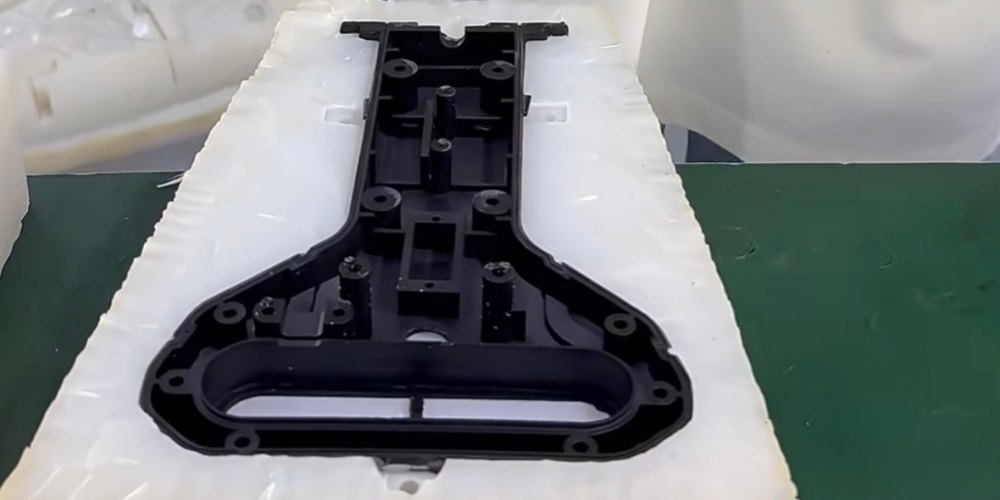
Direct 3D Printing vs. Vacuum Casting Service
You might be wondering: If you use 3D printing to make the master pattern anyway, why not just 3D print all 50 parts? This is a common vacuum casting vs injection molding and 3D printing debate. While direct 3D printing is fantastic for a single concept model, it has limitations in material performance and surface quality. 3D printed parts often have visible layer lines and can be brittle due to the anisotropic nature of the printing process (weakness along the Z-axis).
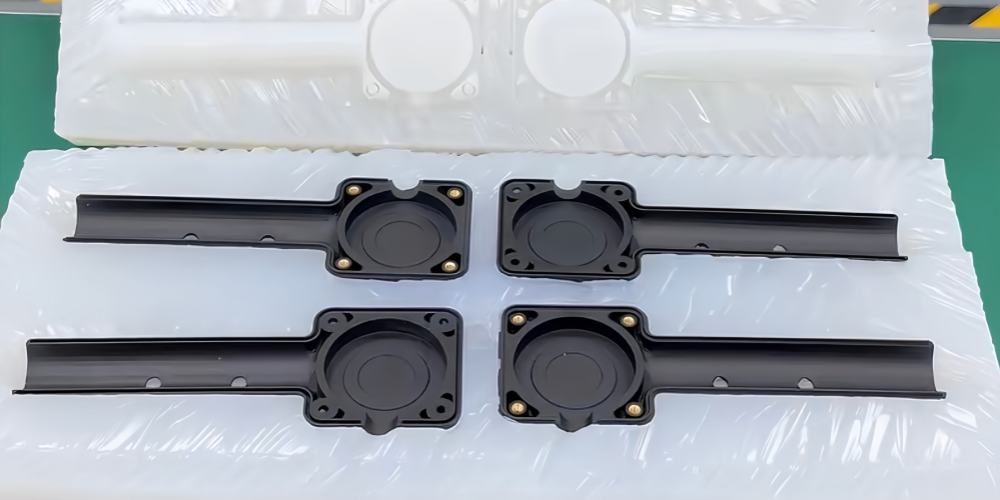
A professional vacuum casting service solves this. Because the liquid polyurethane cures isotropically inside the mold, the resulting parts have uniform strength in all directions. Furthermore, the surface finish of cast parts is flawlessly smooth, completely free of print lines, making them visually and functionally identical to true injection-molded plastics. For any batch between 10 and 50 units, casting remains the undisputed champion of quality and cost-efficiency.
Why Partner with Rally Plastic as Your Vacuum Casting Manufacturer?
When you are ready to move from design to physical testing, the supply chain matters. Choosing to execute your vacuum casting in china with a dedicated manufacturer like Rally Plastic offers distinct advantages.
We combine an extensive inventory of premium global polyurethane resins with state-of-the-art vacuum facilities. Our manufacturing ecosystem allows us to move rapidly from CAD file to master pattern, to silicone mold, to finished parts in a matter of days, not weeks. This agility drastically reduces your time-to-market. Furthermore, scaling from prototyping into low-volume production becomes seamless when you have a partner who understands the nuances of both casting and traditional injection molding.
Conclusion
The success of your prototype heavily relies on the vacuum casting materials you choose. Whether you need the tough resilience of ABS, the crystal clarity of Polycarbonate, or the flexible endurance of Polypropylene, modern polyurethane resins have you covered.
Are you ready to bring your designs to life with materials that perform exactly as intended? Don’t let material limitations hold back your product development. Upload your CAD drawings today and contact Rally Plastic to get your custom vacuum casting service quote. Our engineering team is ready to provide a free project evaluation and guide you toward the perfect resin for your next big innovation.