Finding the right injection molding manufacturing partner can make or break your project. In today’s fast-paced industrial landscape, partnering with the wrong supplier often leads to a cascade of expensive problems: delayed lead times, hidden tooling fees, and inconsistent part quality. You do not just need a vendor with a few machines; you need a strategic manufacturing partner. Choosing a custom plastic injection molding service requires looking far beyond the initial price tag. Whether you are scaling up a consumer electronics product, launching a high-precision medical device, or seeking low volume plastic injection molding services for startups, the vetting process must be rigorous and data-driven.
This comprehensive guide will walk you through the critical steps of evaluating a supplier’s engineering capabilities, tooling strategies, quality control systems, and true production costs. By the end of this article, you will have a clear, actionable checklist to help you identify a reliable partner and avoid costly manufacturing mistakes. At Rally Plastic, we have spent years helping clients navigate these exact challenges, and give you the best injection molding service experience.
1. Start with the Part: Defining Your Molding Requirements
Before sending out RFQs (Requests for Quote) to various injection molding services, you must clearly define the parameters of your specific project. A reputable supplier will want to know your exact needs before they can commit to a timeline or budget.
Distinguish Between Custom Molders and Brokers
The first step is understanding who you are actually talking to. Many companies online act as brokers rather than direct manufacturers. While brokers can sometimes offer competitive pricing by shopping your design around to offshore facilities, they often lack direct control over the manufacturing floor, quality assurance, and IP protection. For complex or proprietary projects, working directly with the facility that owns the equipment is usually the safer choice.
Domestic vs. Overseas Tooling and Molding
This is a classic dilemma for procurement managers. Your decision should be based on your product lifecycle, budget, and tolerance for risk.
| Evaluation Metric | Domestic Molding Partners | Overseas Molding Partners |
| Upfront Tooling Cost | Generally higher | Usually significantly lower |
| Lead Times & Logistics | Faster shipping, no customs delays | Longer transit times, potential port delays |
| IP Protection | Strict legal enforcement | Varies heavily by region and vendor |
| Communication | Same or similar time zones | Requires navigating significant time zone gaps |
Define your production volume early. Are you looking for a short-run bridge tooling solution, or are you preparing for a multi-million part production run? The required volume dictates the type of mold steel used, which drastically impacts your upfront investment.
2. Evaluate the Supplier’s Design-for-Manufacturing (DFM) Capability
The most critical differentiator between a mediocre shop and a top-tier custom plastic injection molding service is their front-end engineering horsepower. A proactive partner will not just take your CAD file and blindly cut steel; they will optimize it.
The Importance of Mold Flow Analysis
Before any metal is machined, the engineering team should provide a comprehensive DFM report and mold flow analysis. This software simulation predicts how the melted thermoplastics will fill the mold cavity. It helps engineers identify optimal gate locations, predict cooling times, and minimize aesthetic defects like sink marks, weld lines, and warpage. The engineering team at Rally Plastic considers this step completely important; we run rigorous mold flow simulations for every custom project to guarantee manufacturability before a single piece of steel is cut.
Insider Tip: Ask potential suppliers how they handle specific defects. For example, ask them to explain their process for troubleshooting short shots in custom ABS injection molding. A knowledgeable engineer will immediately discuss adjusting injection pressure, increasing melt temperature, or modifying the venting design.
Material Selection Guidance
An excellent supplier offers material guidance, not just material availability. With thousands of resins on the market, choosing the right one is critical. If you are developing a medical component, the supplier should proactively discuss biocompatibility, sterilization requirements (like autoclaving), and recommend specific medical-grade resins. If the part requires high structural integrity, they should guide you on glass-filled nylon or PEEK over standard polypropylene. Their engineering team must deeply understand shrinkage rates, chemical resistance, and the specific thermal properties of the plastics they process.
3. Look Closely at Tooling Strategy and Equipment
The heart of any successful injection molding project is the tool itself. The quality of the mold dictates the quality of the final part and the efficiency of the production cycle.
Understanding Mold Quality and Lifespan
When you request a quote for a plastic injection mold, you need to know exactly what you are paying for. Are they using soft aluminum for a quick prototype, pre-hardened P20 steel for a medium run, or fully hardened H13 tool steel designed for a tooling lifespan of over 1 million shots?
Furthermore, you must evaluate their capability regarding mold complexity. Can they handle multi-cavity molds, overmolding, insert molding, or complex side-actions and lifters for parts with undercuts?
Audit the Facility’s Equipment and Automation
The molding machines themselves matter just as much as the mold.
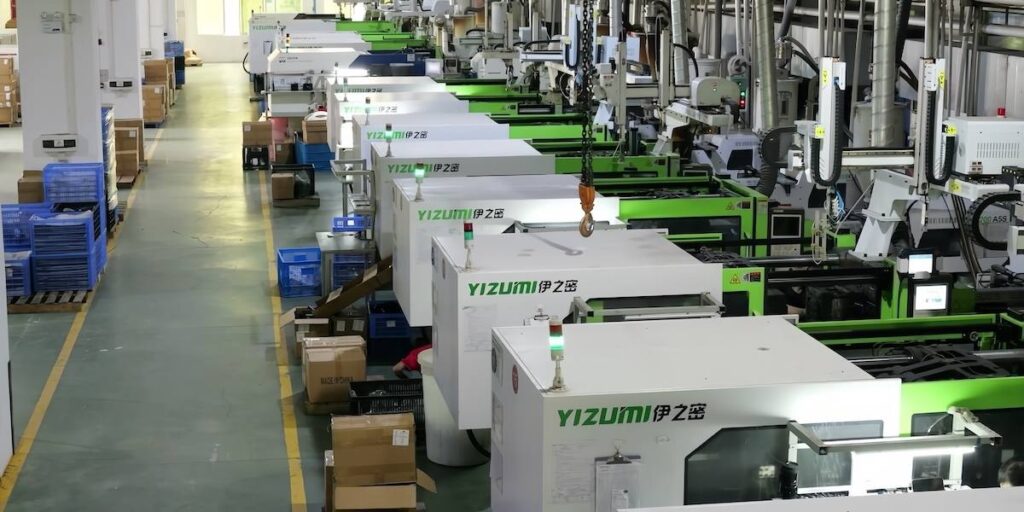
- Machine Tonnage: Does the facility have the right press sizes for your part? A massive automotive bumper requires a high-tonnage press (e.g., 2000+ tons), while small, intricate gears require precise micro-molding machines.
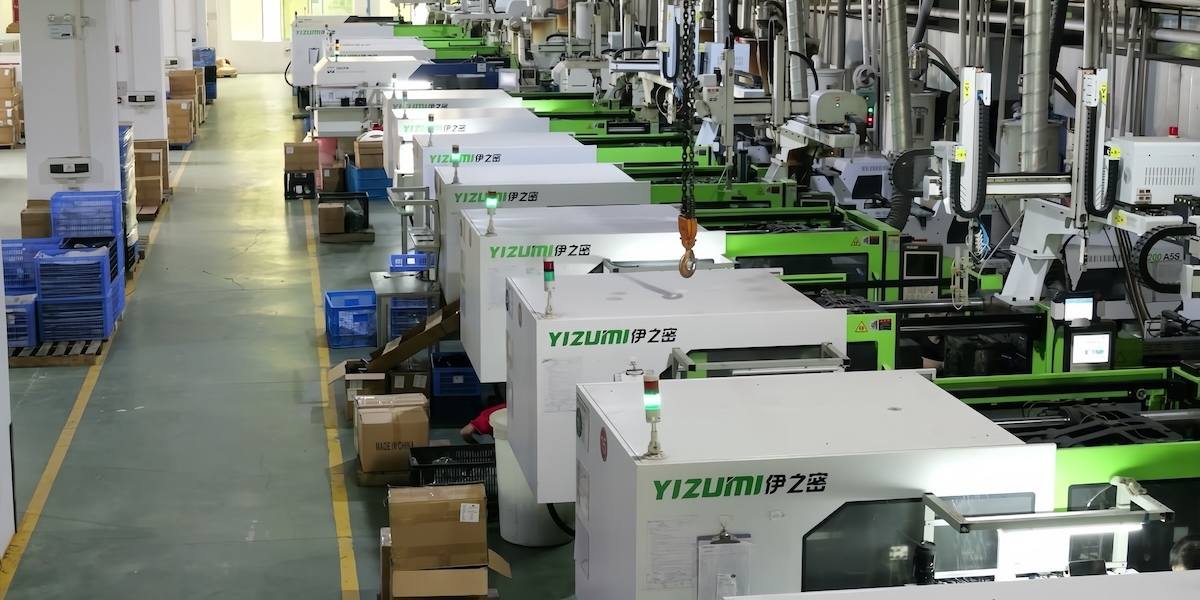
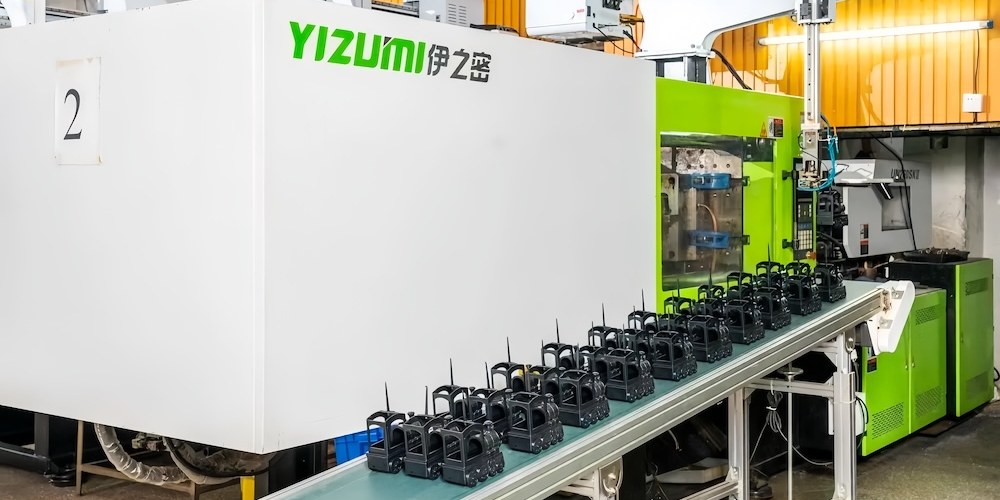
- Automation: Look for facilities that utilize robotics and automated sprue pickers. Automation reduces human error, speeds up cycle times, and prevents parts from being scratched or contaminated during extraction. Automation is a strong indicator of a modern, efficient facility.
4. Review Quality Systems, Process Discipline, and Certifications
B2B buyers need to pay special attention to quality. When evaluating different plastic injection mold companies, their quality control infrastructure must be a primary focus.
Essential Certifications
Do not accept a simple “we check our parts” as an answer. Look for objective, third-party validations.
- ISO 9001: The baseline standard for quality management systems.
- ISO 13485: Mandatory if you are looking for how to choose a custom plastic injection molding service for medical devices.
- IATF 16949: Required for automotive industry suppliers.
The Inspection Process
Ask for examples of their quality documentation. A robust supplier will have a dedicated metrology lab equipped with Coordinate Measuring Machines (CMM) and vision systems. They should be willing to provide a First Article Inspection (FAI) report alongside your initial samples, verifying that every single dimension on your 2D drawing has been met.
Additionally, inquire about their ongoing process discipline. Do they use CPK (Process Capability Index) reporting to ensure dimensional stability over long production runs? Consistent process parameters (temperature, pressure, cooling time) are the only way to guarantee that the 10,000th part is exactly identical to the first.
5. Assessing Total Cost of Ownership (TCO) vs. Upfront Quotes
The most common trap in manufacturing procurement is choosing the vendor with the lowest initial bid. To make a sound financial decision, you must ask for a detailed custom injection molding cost breakdown and understand the Total Cost of Ownership.
Upfront Costs vs. Long-Term Savings
A cheap mold is rarely a good deal. If a supplier cuts corners on the tool design or uses inferior steel, you will inevitably pay the price later in the form of high scrap rates, frequent mold maintenance, and halted production lines. Investing slightly more upfront in a well-designed, highly efficient tool with optimized cooling channels can shave seconds off your cycle time. Over a production run of hundreds of thousands of parts, those saved seconds translate to massive cost reductions.
Transparent Pricing and Value
A professional custom plastic injection molding service will provide transparent quotes that separate the tooling cost from the piece-part price. For instance, every quote provided by Rally Plastic is meticulously itemized, ensuring you know exactly what you are paying for regarding tooling steel, engineering time, and resin. Be wary of quotes that bundle everything together or refuse to explain their markup on resin. You must also factor in the cost of quality. If a cheap supplier has a 5% defect rate that you have to catch at your own assembly plant, their “low” piece price is actually severely inflated. Always evaluate the supplier based on the long-term value they provide, including their engineering support, low defect rates, and reliable on-time delivery.
6. Look for Value-Added and Secondary Operations
A true manufacturing partner does much more than just shoot melted plastic into a mold. If your product requires post-molding assembly or finishing, relying on multiple different vendors will drastically increase your logistics costs and complicate your supply chain.
When evaluating plastic injection mold companies, look for facilities that offer a comprehensive suite of secondary operations under one roof. These value-added services often include:
- Ultrasonic Welding & Heat Staking: Essential for permanently joining multiple plastic components or embedding metal threaded inserts into thermoplastic parts.
- Surface Finishing & Decorating: Capabilities like pad printing, silk screening, laser etching, and custom painting.
- Custom Assembly and Packaging: Can the supplier assemble the molded parts, add third-party components (like springs or screws), and package the final product in retail-ready boxes?
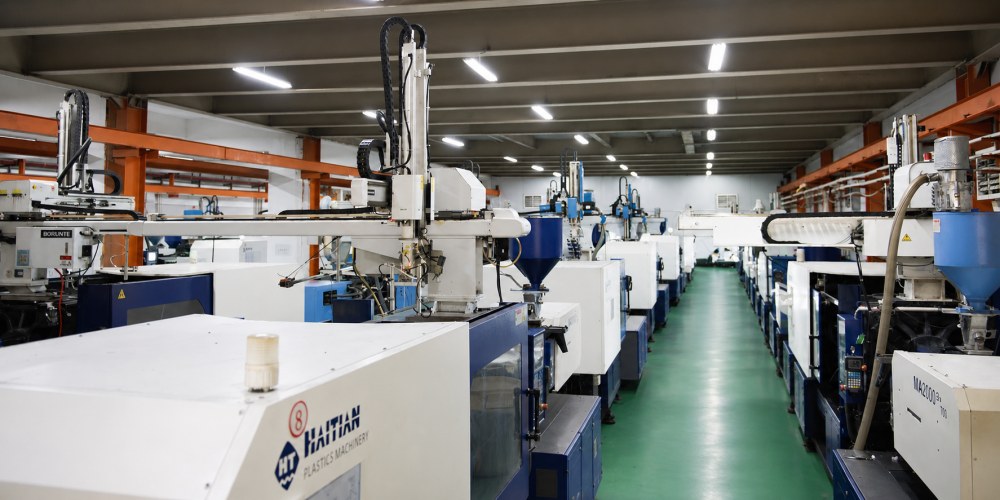
By utilizing a custom plastic injection molding service that handles these post-molding processes, you streamline communication, reduce freight costs between sub-contractors, and ensure a single point of accountability for the final product’s quality. This all-in-one approach significantly reduces your time-to-market.
7. Commitment to Sustainability and Eco-Friendly Manufacturing
In modern manufacturing, sustainability is no longer just a buzzword; it is a strict requirement for many global brands. Partnering with an eco-conscious plastic mold company not only helps you meet your corporate ESG (Environmental, Social, and Governance) goals but can also lead to more efficient, cost-effective production.
Material Waste and Regrind Practices
Ask the supplier about their scrap reduction and recycling protocols. A responsible facility will use closed-loop systems to collect runners and sprues, grinding them down (regrind) to be reused in appropriate applications without compromising the structural integrity of the final part.
Energy Efficiency
Injection molding is traditionally an energy-intensive process. However, forward-thinking injection molding services are investing in all-electric or hybrid injection molding machines. These modern presses use up to 70% less energy than older hydraulic machines, run quieter, and offer tighter precision. Additionally, check if the supplier holds an ISO 14001 certification, which demonstrates a formalized commitment to environmental management and waste reduction.
8. Red Flags When Choosing a Partner
As you finalize your decision, keep an eye out for these critical warning signs that indicate you might be partnering with the wrong plastic mold company:
- Lack of Communication: If they are slow to respond to your RFQ, provide vague answers to technical questions, or have poor English/communication skills during the sales process, do not expect it to get better once they have your money.
- No Clear IP Protection Policy: Your CAD designs are your most valuable intellectual property. If a supplier is hesitant to sign a Non-Disclosure Agreement (NDA) or cannot explain how they secure client files, walk away immediately.
- Unrealistic Lead Times: If three suppliers quote 6-8 weeks for a complex hardened steel tool, and one promises it in 15 days for half the price, they are likely cutting corners, outsourcing to a sub-par shop, or simply lying to win the business.
- Refusal to Share Factory Details: If they will not allow a factory audit (in-person or virtual) or refuse to share their equipment list, they are likely a broker masquerading as a manufacturer.
Conclusion
Selecting a reliable manufacturing partner is an investment of time and resources, but doing it correctly guarantees the scalable success of your product. By starting with a clear definition of your project, rigorously evaluating DFM engineering capabilities, understanding tooling strategies, and prioritizing Total Cost of Ownership over cheap initial quotes, you mitigate risk and set your supply chain up for stability.
Take the time to ask the hard questions about mold flow analysis, quality certifications, and defect troubleshooting. If you are ready to move forward and want to work with a transparent, technically proficient custom plastic injection molding service, the experts at Rally Plastic are here to help. Contact us today to submit your CAD files, and we will provide a comprehensive manufacturability review and get a quote for plastic injection mold solutions tailored exactly to your needs.