
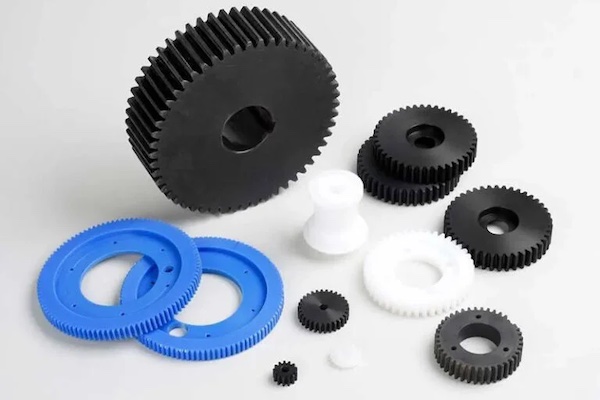
Are your plastic parts cracking under stress or warping in heat? Many manufacturers face serious challenges maintaining dimensional stability and mechanical strength in harsh environments. These problems lead to product failures, costly recalls, and design compromises. Nylon (PA6/PA66) offers an ideal solution. With superior toughness, wear resistance, and thermal stability, nylon—when processed through precision injection molding—delivers reliable performance in critical structural and functional components.
Nylon injection molding (PA6/PA66) provides excellent strength, toughness, and wear resistance. These properties make it ideal for automotive, industrial, and consumer plastic parts. PA6 offers better flexibility and impact resistance, while PA66 delivers higher stiffness and thermal stability. With the right mold design and processing parameters, both materials ensure tight tolerances and consistent performance in demanding environments.
Overview of Nylon (PA6 & PA66) Properties
Nylon, also known as polyamide, is a synthetic thermoplastic known for its mechanical strength and wear resistance. Both PA6 and PA66 belong to this family, but they differ in structure and performance. PA6 is made by polymerizing caprolactam, while PA66 results from hexamethylenediamine and adipic acid.
PA6 has slightly lower crystallinity, making it more flexible and impact-resistant. In contrast, PA66 exhibits higher crystallinity, offering better rigidity and thermal resistance. Both materials feature excellent mechanical properties, including high tensile strength, fatigue resistance, and dimensional stability.
These characteristics make nylon widely used in applications requiring durability, from automotive components to industrial housings. Understanding the PA6 vs. PA66 comparison helps engineers choose the right grade for specific performance needs.
Advantages of Nylon Injection Molding
Nylon injection molding offers a unique balance of strength, flexibility, and durability. One of its primary benefits is high tensile strength and fatigue resistance, making it ideal for load-bearing applications subjected to repeated stress. Nylon also provides excellent wear resistance and low coefficient of friction, which reduces part degradation in moving assemblies.
In addition, nylon materials offer good electrical insulation and high heat deflection temperatures, especially in PA66, making them suitable for electrical housings and under-the-hood automotive parts. Their ability to maintain structural integrity under mechanical and thermal loads ensures long service life.
From a manufacturing standpoint, nylon is highly cost-effective for high-volume production. It flows well in molds, allowing for fast cycle times and high repeatability. These advantages make molded nylon components a preferred choice in industries such as automotive, electronics, and consumer products.
Design Considerations for Nylon Molded Parts
Designing nylon injection molded parts requires special attention to material behavior. First, maintain uniform wall thickness—ideally between 1.5 to 3.5 mm—to avoid warpage and sink marks. Sudden changes in thickness can lead to internal stresses or incomplete fill.
For structural strength, well-placed ribs and bosses enhance rigidity without adding excess material. However, over-designing these features may trap air or hinder flow. Include a draft angle of at least 1°–2° to ensure smooth part ejection from the mold.
Nylon exhibits notable shrinkage, especially PA6, which has a higher moisture absorption rate. This can affect dimensional accuracy after molding. Designers should account for shrinkage rates of 0.5–2%, depending on part geometry and filler content.
Since nylon absorbs moisture from the air, parts can expand slightly over time. Tolerances should reflect this behavior, especially for precision or mating components.
Processing Conditions for Nylon Injection Molding
Nylon (PA6/PA66) is highly sensitive to moisture, making proper drying essential. Resin must be dried at 80–100°C for 4–6 hours to prevent hydrolysis, which degrades molecular weight and weakens the final part.
The barrel temperature during molding should be maintained between 230–300°C, depending on the grade and filler content. Excessive temperatures can lead to discoloration or burn marks. At the same time, keep the mold temperature between 80–100°C to ensure good surface finish and dimensional stability.
Holding pressure and cooling time are critical. Nylon shrinks more than many other plastics, so a proper holding stage ensures cavity fill and reduces voids. Cooling time should be optimized to balance cycle time and warpage risk.
Precise control over these injection settings results in consistent part quality, especially for high-tolerance or load-bearing applications.
Common Defects and Solutions
Despite its benefits, nylon injection molding can present several common defects if not properly managed. Voids and sink marks often result from inadequate packing or inconsistent wall thickness. Applying uniform wall design and sufficient holding pressure can reduce these issues.
Flash—excess material at the parting line—usually indicates excessive injection pressure or poor mold alignment. Ensure the mold is well-fitted and clamp force is adequate.
Warpage is especially common in PA6 due to its high moisture absorption. Drying the resin thoroughly and using balanced mold cooling are effective PA6 warping solutions.
Burn marks, caused by trapped air or overheating, can be minimized by optimizing barrel temperatures and improving venting. Good mold design, including proper gate location and flow paths, is key to minimizing these defects.
By addressing these nylon injection molding defects through proactive design and processing adjustments, manufacturers can significantly improve product quality and consistency.
Typical Applications of PA6 and PA66
PA6 and PA66 are widely used in demanding applications where strength, wear resistance, and thermal stability are required. In the automotive industry, they are used for gears, engine covers, radiator tanks, and under-hood brackets, thanks to their high mechanical strength and heat resistance.
In electrical and electronics, nylon is commonly chosen for connectors, cable ties, and insulators due to its dielectric properties. Industrial applications include pulleys, wear pads, and bushings, where consistent dimensional performance under load is critical.
For consumer goods, PA6 and PA66 are found in power tool casings, appliance parts, and even sporting goods like ski bindings and bicycle pedals. Their durability, light weight, and ease of molding make them ideal for both functional and aesthetic parts.
| Industry | PA6 Applications | PA66 Applications |
|---|---|---|
| Automotive | Flexible clips, air intake manifolds | Gear housings, radiator end tanks |
| Electrical | Wire sleeves, flexible insulators | Connectors, terminal blocks |
| Industrial | Low-load pulleys, sliding strips | Structural bearings, guide rails |
| Consumer Products | Tool handles, sporting gear shells | Power tool enclosures, mechanical levers |
Choosing the Right Nylon Type for Your Application
Selecting between PA6 and PA66 depends on your application’s mechanical, thermal, and dimensional requirements. PA6 is the better choice when flexibility, impact resistance, and vibration damping are critical. It’s ideal for parts that require some elongation or need to absorb shocks.
In contrast, PA66 provides greater dimensional stability and higher heat resistance, making it preferable for precision parts, structural components, and applications exposed to continuous high temperatures.
For enhanced performance, consider custom nylon blends or glass-filled grades. Adding glass fiber increases stiffness, reduces shrinkage, and improves load-bearing capacity—essential for demanding industrial and automotive parts.
Matching the right nylon formulation to the end-use environment ensures optimal product performance, lifespan, and cost-efficiency.
Case Study – PA66 Gear Housing for Automotive Industry
An automotive client required a gear housing capable of withstanding continuous mechanical loads and operating temperatures around 120°C. The component demanded dimensional accuracy, excellent wear resistance, and long-term thermal stability.
To meet these criteria, we selected 30% glass fiber-reinforced PA66, known for its high stiffness and low creep. A high-precision injection mold was developed to achieve tight tolerances and optimal flow for the filled material.
The final molded part demonstrated significantly reduced wear during endurance testing and retained structural integrity after prolonged high-temperature exposure. Compared to unfilled PA66, the reinforced version extended the product’s service life by over 30%.
This project highlights the effectiveness of glass fiber nylon molding in demanding automotive applications and showcases how PA66 automotive parts can outperform traditional thermoplastics in both strength and reliability.
Conclusion
Nylon injection molding—especially with PA6 and PA66—offers the ideal combination of strength, toughness, and design flexibility. From automotive gears to industrial housings, choosing the right nylon grade ensures superior performance and longevity. At RALLY Plastic, we specialize in high-precision nylon molding, including glass-filled solutions for demanding applications. Upload your drawings today and discover how our team can turn your design into a high-performance nylon component.