
Choosing the wrong mold type can delay your project, inflate costs, and kill efficiency. Many engineers underestimate how mold design impacts part delivery. But understanding the difference between single-cavity and multi-cavity molds helps you optimize production, reduce lead times, and avoid costly mistakes.
Single-cavity molds produce one part per cycle and are ideal for low-volume production or prototyping. In contrast, multi-cavity molds create multiple identical parts in a single shot, making them more suitable for high-volume production. The decision between the two depends on factors like required part quantity, budget, and lead time goals. Choosing the right mold type ensures better cost-efficiency and production speed.
What Is a Single-Cavity Mold?
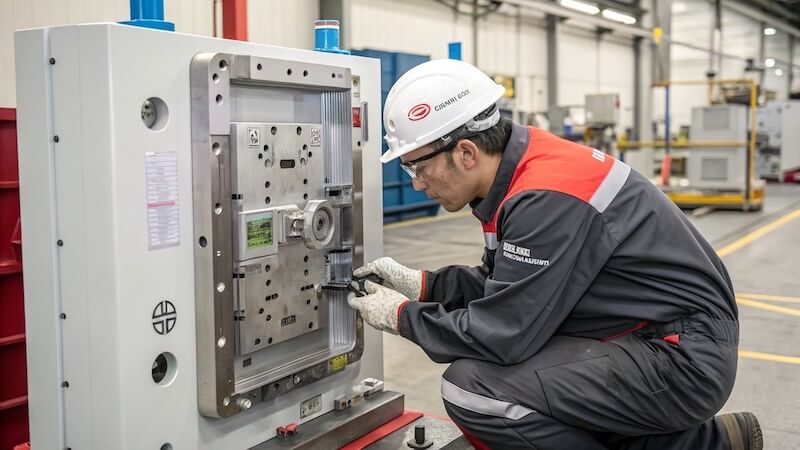
A single-cavity mold is a type of injection mold that produces only one part per cycle. It features a single mold cavity in which molten plastic is injected, cooled, and ejected. This mold structure is simpler and more cost-effective to manufacture compared to multi-cavity options.
Single-cavity molds are commonly used for low volume production, prototyping, and product validation. They’re ideal when testing a new design, producing limited batches, or when part demand is unpredictable.
Key advantages of single-cavity molds include lower initial tooling costs, faster lead time during mold fabrication, and greater flexibility for design changes or product iterations. They’re easier to maintain and modify, making them a smart choice for startups and custom projects.
However, the main drawback is production speed. Since only one part is produced per cycle, it takes longer to fulfill large orders. This can lead to higher per-part costs and extended delivery times for high-volume needs.
In short, single-cavity molds offer a cost-effective and flexible solution for small-scale or developmental manufacturing stages.
What Is a Multi-Cavity Mold?

A multi-cavity mold is an injection mold designed to produce multiple identical parts in a single cycle. Instead of a single cavity, the mold contains two or more cavities arranged within the same mold base, allowing for significantly higher output.
These molds are widely used in high-volume injection molding where production speed, consistency, and cost-efficiency are critical. Common applications include consumer products, automotive components, and medical devices—industries where demand is large and stable.
The advantages of multi-cavity molds are clear: they drastically reduce cycle time per part, lower the unit cost, and maximize machine utilization. Over time, the cost of the mold is offset by higher throughput and efficiency gains.
However, the drawbacks include a higher initial tooling investment, longer mold fabrication lead time, and increased design complexity. Maintaining consistent flow and pressure balance across all cavities requires expert engineering.
In summary, multi-cavity molds are ideal for manufacturers who prioritize speed, volume, and cost-per-part savings over tooling flexibility.
Key Differences Between Single and Multi-Cavity Molds
Choosing between a single-cavity and a multi-cavity mold depends on your production goals. Each has distinct advantages and trade-offs. Here’s a quick comparison:
| Factor | Single-Cavity Mold | Multi-Cavity Mold |
|---|---|---|
| Injection Mold Cost | Lower initial tooling cost | Higher upfront investment |
| Tooling Complexity | Simple design, faster to build | Complex layout, requires advanced engineering |
| Production Speed | Slower—1 part per cycle | Faster—multiple parts per cycle |
| Lead Time | Shorter mold manufacturing time | Longer lead time due to complexity |
| Unit Cost | Higher per-part cost | Lower per-part cost over large volumes |
| ROI | Better for small runs or prototypes | Higher ROI for mass production |
While single-cavity molds are best for low-volume, flexible projects, multi-cavity molds shine in high-volume, cost-sensitive manufacturing. The decision isn’t one-size-fits-all.
Consider factors like part demand, production timeline, and available budget. For custom parts, it may even make sense to start with a single-cavity mold and scale up later.
Ultimately, the best mold type depends on your unique production needs and return on investment expectations.
When to Choose a Single-Cavity Mold
A single-cavity mold is the ideal choice for specific manufacturing scenarios—especially in the early stages of product development. If you’re building a prototype mold or preparing for a limited product launch, this option offers the flexibility and affordability you need.
It’s particularly useful for startups and businesses working with tight budgets. Single-cavity molds have a lower upfront cost, making them suitable for validating designs, testing material behavior, and fine-tuning product geometry without committing to a large-scale investment.
Another key benefit is design adaptability. If your project is in a phase where frequent changes are expected—whether due to evolving customer feedback or technical adjustments—a single-cavity mold allows for faster modifications and easier updates.
Moreover, it reduces waste and risk. Producing one part at a time means you can catch and correct errors early, without compromising multiple parts or burning through costly raw materials.
In summary, choose a single-cavity mold when you’re dealing with low-volume production, prototyping, or uncertain market demand. It’s the most efficient way to move from concept to reality without overextending your resources.
When to Choose a Multi-Cavity Mold
A multi-cavity mold is the smart choice for high-volume, long-term production. If you’re manufacturing a product with stable demand and tight delivery schedules, this mold type maximizes throughput and efficiency.
One of the biggest advantages is cost-effective production. Although the initial tooling investment is higher, the cost per part drops significantly as you produce more units. Over time, this creates a strong return on investment, especially for mass-market plastic parts.
Multi-cavity molds also dramatically shorten overall cycle time. Producing 4, 8, or even 16 parts per shot allows manufacturers to meet strict deadlines and reduce labor and machine idle time. This is critical for industries like automotive, consumer goods, and medical devices, where delivery speed and volume are essential.
If you’re aiming to scale production quickly or reduce reliance on multiple mold setups, multi-cavity tools deliver the consistency and output required. They also ensure uniform part quality, as each cavity is precisely balanced and engineered.
In summary, choose a multi-cavity mold when your project demands low per-unit cost, tight lead times, and large quantities. It’s the most efficient route to meet production goals at scale.
How Mold Cavitation Affects Unit Cost and Lead Time

The number of cavities in an injection mold—known as mold cavitation—has a direct impact on both unit cost and cycle time. More cavities mean more parts produced per cycle, leading to higher production efficiency and faster delivery.
However, this efficiency comes at a price. Multi-cavity molds are more complex and expensive to manufacture. That’s why it’s crucial to find the break-even point—the production volume at which the higher tooling cost is justified by the lower cost per part.
Example:
Let’s say a single-cavity mold produces one part every 30 seconds. A four-cavity mold produces four parts in the same time. If your total order is 100,000 parts, the single-cavity mold will take 833 hours, while the four-cavity mold only takes 208 hours. The time and labor savings quickly offset the higher mold cost.
A detailed unit cost analysis often shows that for large orders, multi-cavity molds offer superior ROI. But for short runs, single-cavity tools remain more economical.
In short, mold cavitation directly influences your bottom line. Understanding this balance helps you make smart, scalable tooling decisions.
Expert Tips for Choosing the Right Mold Type
Selecting the right mold type starts with analyzing your production volume, budget, and time constraints. Here are some expert tips to guide your decision:
-
Estimate annual part demand. If you expect fewer than 10,000 units, a single-cavity mold may be more cost-effective. For higher volumes, multi-cavity is usually the better investment.
-
Factor in product lifecycle. Short-lived or fast-evolving products benefit from the flexibility of single-cavity molds.
-
Evaluate lead time needs. Tight deadlines often require multi-cavity molds to meet delivery schedules.
-
Consider future scaling. Starting with a single cavity and upgrading later can reduce initial risk while allowing for growth.
-
Work with experienced mold makers. A qualified supplier like RALLY can run simulations, evaluate cavitation options, and recommend the most cost-efficient tooling solution.
In summary, tailor your mold strategy to match your project goals—not just part count.
Conclusion
Choosing between a single-cavity and multi-cavity mold is not a one-size-fits-all decision. It depends on your project’s volume, budget, timeline, and long-term goals. A well-informed choice will optimize cost, speed, and product quality.
👉 Ready to start your custom molding project?