
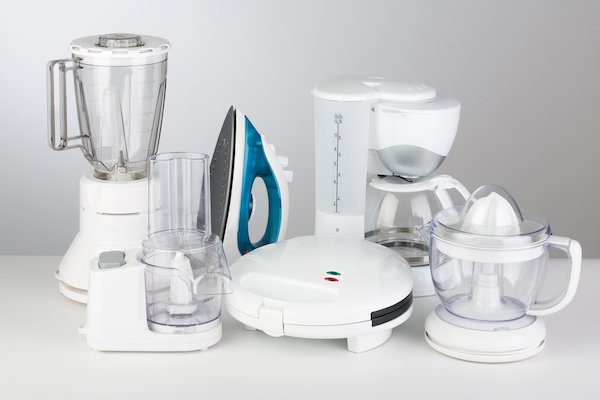
Modern home appliances demand plastic components that are lightweight, durable, and visually appealing. However, traditional manufacturing methods often fall short—resulting in high production costs, slow turnaround, and inconsistent quality. These issues hinder efficiency and compromise product performance.
Home appliance injection molding solves this by offering high-speed production, precise dimensional control, and compatibility with a wide range of engineering plastics. Whether you’re manufacturing control panels, air vents, or internal housings, injection molding ensures every part meets rigorous technical and aesthetic standards.
Home appliance injection molding is a manufacturing process where molten plastic is injected into custom molds to produce parts used in household appliances. It is ideal for high-volume production of complex components with consistent quality. The method supports tight tolerances, design flexibility, and material variety, making it suitable for everything from washing machine knobs to refrigerator duct panels.
This process is widely used by OEMs and appliance manufacturers seeking cost-effective, scalable solutions for both structural and cosmetic plastic parts.
Why Injection Molding is Used for Home Appliances
Injection molding offers unmatched efficiency and precision, making it the preferred choice for manufacturing home appliance plastic parts. Its low cycle time enables rapid, high-volume production while maintaining tight tolerances—crucial for components like control knobs, air vents, and inner housings.
Unlike machining or thermoforming, injection molding supports complex geometries and thin-wall designs without compromising structural integrity. It allows for the integration of functional features, such as clips and undercuts, directly into the mold, reducing the need for secondary assembly.
For manufacturers focused on mass production plastics, this process provides superior repeatability and cost-effectiveness. Once the mold is built, each cycle produces an identical part, minimizing defects and waste.
In short, home appliance injection molding combines speed, accuracy, and scalability—qualities essential for today’s competitive consumer electronics and household goods markets.
Typical Plastic Components in Appliances
Home appliances consist of a wide range of frequently molded parts designed to be lightweight, durable, and cost-effective. These components must withstand regular use, heat, moisture, and mechanical stress—making injection molding an ideal solution.
In the kitchen, typical items include microwave buttons, display bezels, blender bases, and coffee maker panels. In laundry machines, parts like control knobs, inner baskets, and detergent drawers are commonly injection molded.
The HVAC sector relies on precision-molded components such as air conditioner vents, louvers, and fan blades that require tight tolerances and aerodynamic consistency. For small appliances like vacuum cleaners and hair dryers, injection molding is used to produce functional plastic covers, motor housings, wheels, and filters.
These high-volume assemblies benefit from fast production cycles, consistent quality, and the ability to replicate complex shapes with minimal waste.
Injection molded appliance parts are essential to modern device performance, both structurally and cosmetically, particularly in consumer-facing products like appliance housing.
Material Selection for Appliance Molding
Choosing the right plastic is crucial to ensure performance, safety, and appearance in home appliance injection molding. Each resin offers unique properties tailored to different use cases—from structural strength to heat resistance. Below are the most commonly used materials for molded appliance parts:
| Material | Key Features | Common Applications |
|---|---|---|
| ABS | Tough, impact-resistant, easy to paint or texture | Control panels, remote casings, ABS molding for knobs |
| PP | Lightweight, moisture and chemical resistant | Water trays, appliance-grade PP drawers, air ducts |
| PC | Transparent, high heat resistance, strong | Oven windows, covers, PC parts in appliances |
| PA | Excellent strength and fatigue resistance | Gears, motor housings, clips |
| HIPS | Cost-effective, good surface finish | Refrigerator liners, decorative trims |
Selecting the right resin depends on load requirements, environmental exposure, and cosmetic needs. With proper material choice, manufacturers achieve optimal functionality and durability for injection molded appliance parts.
Benefits of Injection Molding in Appliance Manufacturing
Injection molding offers several critical advantages that make it the preferred method for producing plastic components in home appliances.
One major benefit is cost reduction. Once the mold is built, each part can be produced at a low unit cost—ideal for high-volume orders. The process delivers exceptional precision, maintaining tight tolerances even across thousands of cycles, ensuring a consistent fit and finish.
Injection molding also enables manufacturers to create automation-ready components. Parts can be designed with integrated clips, alignment features, or snap-fits that eliminate secondary assembly steps. Additionally, it supports inserts (like threaded metals) and overmolding for parts requiring soft-touch finishes or multi-material combinations.
These capabilities allow brands to streamline plastic manufacturing for appliances, reduce assembly time, and improve product durability.
The combination of speed, accuracy, and design flexibility highlights the injection molding advantages that drive efficiency in modern appliance production.
Design Tips for Home Appliance Parts
Effective part design is essential for successful appliance injection molding. A well-optimized design reduces defects, shortens cycle time, and lowers production costs.
Start by maintaining uniform wall thickness to prevent internal stress and warping during cooling. Sudden changes in thickness can cause sink marks or uneven shrinkage. For added strength without adding mass, use ribs and gussets—they enhance structural integrity in large or thin-walled parts.
Proper draft angles and venting must be incorporated to ensure smooth part ejection and reduce the risk of burn marks or flash. Snap-fit features are also recommended when possible, as they eliminate the need for screws or adhesives, simplifying final assembly.
Finally, consider surface textures that align with your branding—from high-gloss finishes for modern aesthetics to matte patterns that resist fingerprints.
These molded part design tips help appliance manufacturers achieve consistent quality, visual appeal, and manufacturability, all critical in competitive product markets.
Challenges and Quality Standards
Producing high-quality appliance parts through injection molding requires overcoming several technical and regulatory challenges. Maintaining tight tolerances is critical, especially for parts that interface with mechanical or electrical systems. Even slight dimensional errors can lead to malfunction or poor assembly fit.
Surface defects, such as sink marks, weld lines, or flow lines, can compromise appearance and function—particularly for visible components. Achieving aesthetic consistency across large production runs demands strict process control and material quality.
Color matching across batches is another concern, especially for multi-part assemblies. In addition, manufacturers must meet safety compliance with certifications like UL, CE, and RoHS, which are mandatory for many export markets.
Finally, achieving long-term stability in output relies heavily on tooling quality. Precision molds require regular maintenance to avoid degradation and maintain performance.
Addressing these challenges ensures product reliability, regulatory acceptance, and consumer satisfaction—key goals in home appliance safety standards.
Case Study – Molded PP Air Duct for Refrigerator
A global appliance brand approached us to produce an internal air duct for a new refrigerator line. The project required custom tooling to meet space constraints within the unit’s insulation layer while maintaining airflow efficiency.
We selected food-grade polypropylene (PP) for its thermal stability, chemical resistance, and ease of processing. The part featured thin wall sections, which posed cooling challenges and risked deformation. Our engineering team optimized gate placement and mold cooling channels to ensure dimensional stability.
Through precise custom PP molding, we achieved consistent part quality and passed all airflow performance tests. The mold was designed for high-cycle durability, supporting a production volume of over 50,000 pieces per month with minimal downtime.
This project highlights how refrigerator plastic parts can be manufactured at scale with tight tolerances and minimal defects—demonstrating the importance of application-specific design in any appliance mold case.
Conclusion
Home appliance injection molding plays a crucial role in delivering durable, high-quality plastic parts for modern consumer products. From air vents and control panels to structural housings, this process offers unbeatable speed, consistency, and scalability. By selecting the right material, designing for manufacturability, and working with an experienced supplier, manufacturers can reduce costs while meeting demanding performance and compliance standards.
At RALLY Plastic, we specialize in precision-molded components for global appliance brands. With ISO-certified processes, in-house mold engineering, and fast turnaround times, we help you bring your product to market—faster and better.
Upload your 2D/3D drawings today to get a free quote.
Contact RALLY Plastic and let’s build smarter appliance parts, together.